CASE STUDY 01 · AI × FINANCE · DESIGN + BUILD
Nexus
Transform
Making AI-written SQL something an analyst can actually sign off on.
00 — THE LIVE APP
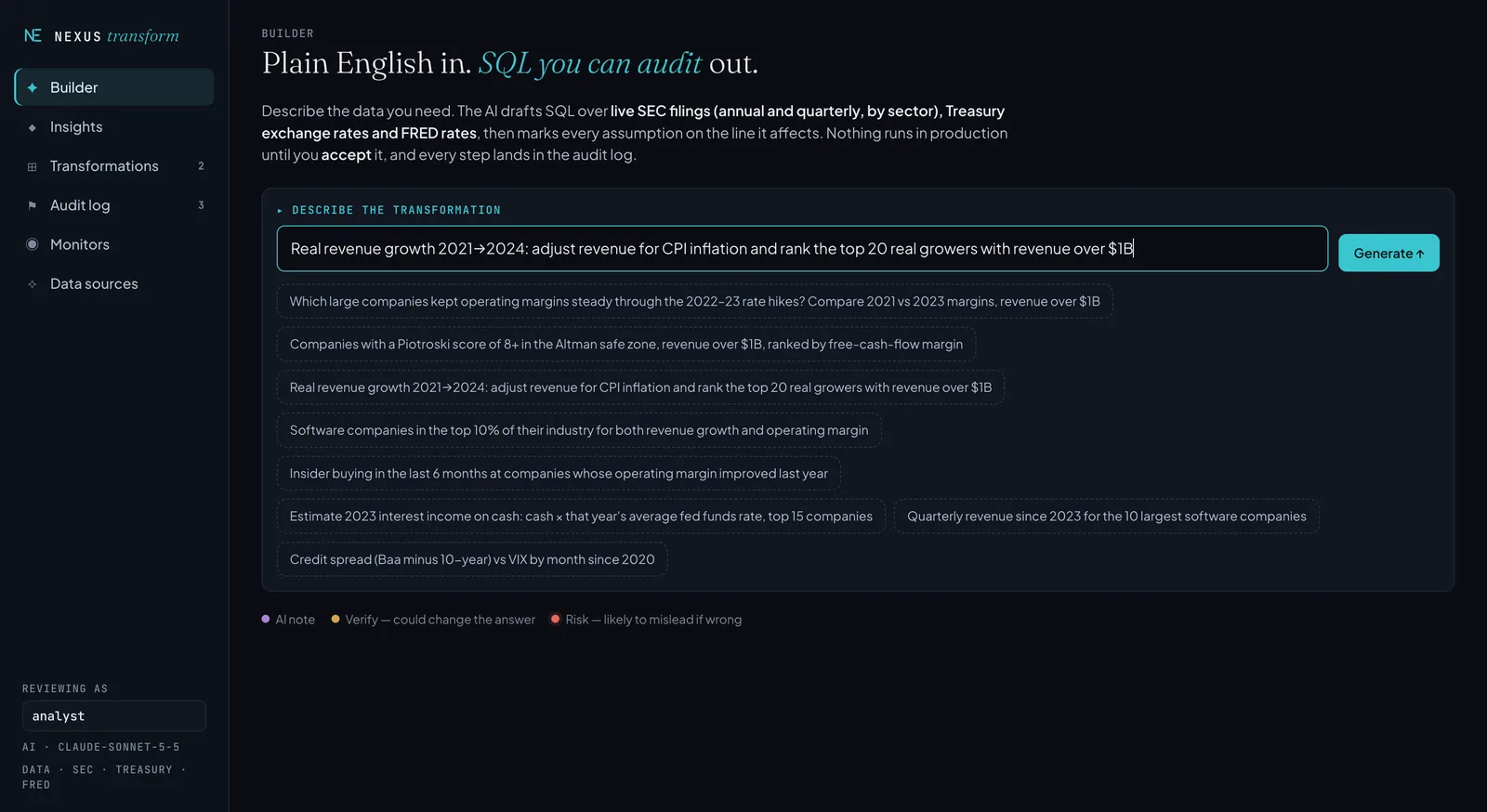
Ask in English.
Sign off on SQL.
01 — THE PROBLEM
A language model can write SQL in seconds. The hard part is trust: nobody can sign off on a number when the assumptions behind it are buried in a paragraph of explanation.
Nexus treats AI output like work pinned up for a design critique. Every assumption is marked up where it applies, every change becomes a new version, and nothing ships without a human sign-off.
02 — THE BUILDER, MARKED UP
Four decisions,
one screen
Which non-bank companies saw gross margin fall three years running — and did insiders buy anyway?
-
1
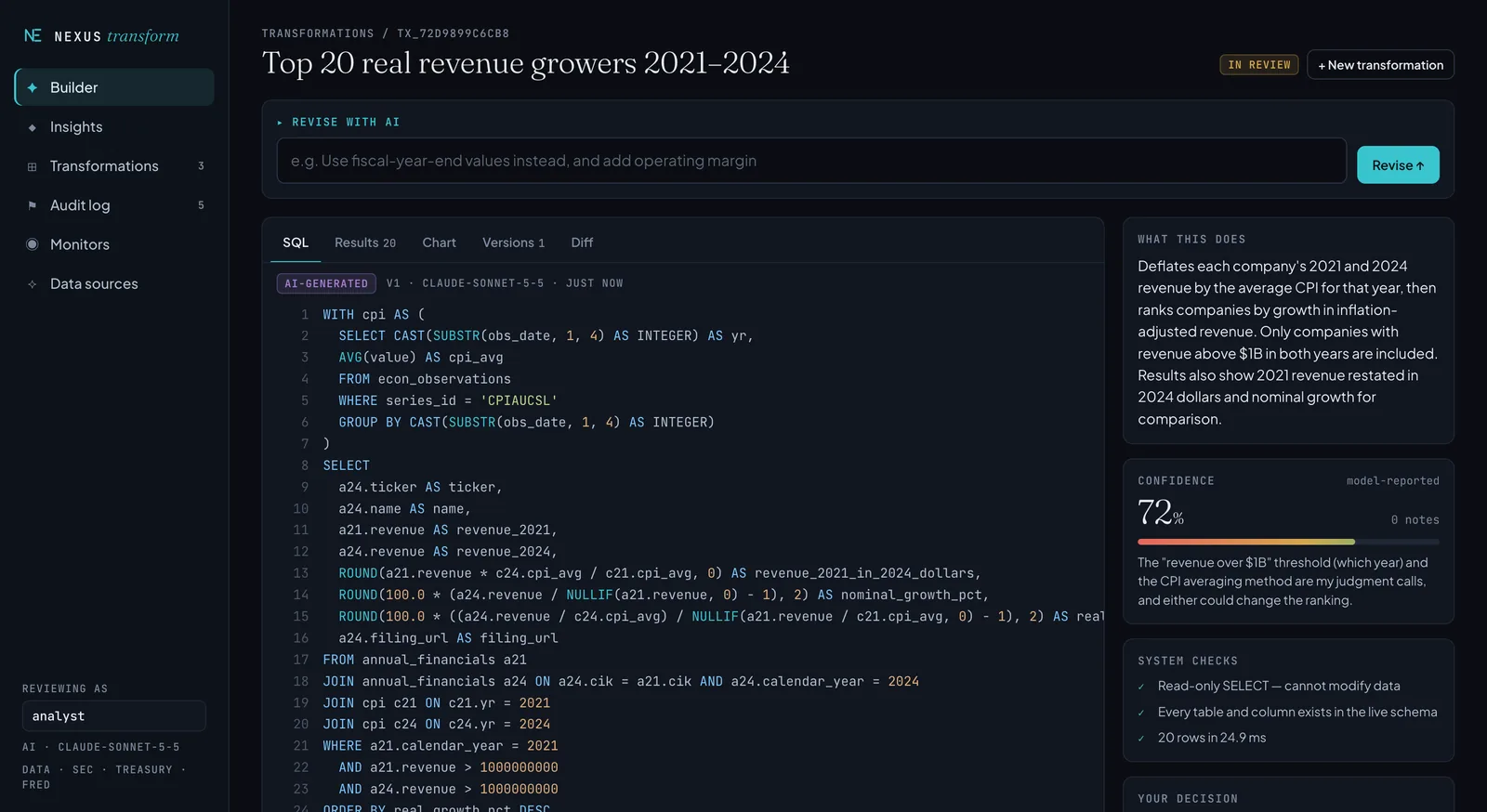
Assumptions live on the line they change
Not a summary paragraph under the result. A reviewer can reject one premise without rereading the whole query.
-
2
Two confidence signals, never blended
What the model says about itself sits beside independent system checks. When they disagree, that's the most useful thing on the screen.
-
3
The AI drafts. People decide.
Accept, edit, reject are the only ways a transformation moves forward. Every version is kept and can be diffed.
-
4
A log that knows who did what
Requested, generated, repaired, edited, accepted — AI actions labeled separately from human ones, exportable as CSV.
03 — MEDIUM & SOURCES
| AREA | SOURCE | REFRESH |
|---|---|---|
| Fundamentals | SEC EDGAR XBRL frames | WEEKLY |
| Insider trading | SEC Form 4 data sets | DAILY CHECK |
| Fund holdings | SEC Form 13F data sets | DAILY CHECK |
| Prices & valuation | Finnhub | DAILY |
| Macro | FRED | WEEKLY |
| FX | U.S. Treasury | WEEKLY |
04 — KNOWN LIMITS
Every work has its edges
Being upfront about the limits is part of the design. These are shown to users, not hidden in a README.
- Fundamentals use SEC calendar-year frames, not fiscal years.
- Companies using uncommon XBRL tags show NULL for that metric.
- Sectors use SEC SIC codes, older and coarser than GICS.
- 13F filings list issuer names, not tickers — matching is by name.
- Altman and Beneish scores don't apply to banks and insurers and are left NULL.
05 — OUTCOME
It started as a six-week concept — the AI Transformation Builder. This is that concept made real: a working app running on live public SEC data, with every decision from the original design intact.
06 — NEXT ITERATION
- Stream the SQL as it's written, so the draft feels alive.
- A schema preview, so people see what data exists before they ask.
- A library of saved prompts that worked.
- Collaborative review — an engineer can annotate the AI's draft for the analyst.